01
Trust and contact clarity
Biofeedback FPC and the entry-offer proof show how public pages, credentials, and contact paths can make a business easier to trust.
See flagship casesProof
The strongest proof is not a gallery of screenshots. It is a clear record of what was unclear, what changed, which assets were prepared, and what decision became easier after the work.
Fast trust read
This page is long on purpose, but buyers should not have to decode it from top to bottom. Use the cards below to judge the first proof layer quickly, then inspect the deeper artifacts if the fit is real.
01
Biofeedback FPC and the entry-offer proof show how public pages, credentials, and contact paths can make a business easier to trust.
See flagship cases02
The A&T delivery system and intake demo show guardrails, review states, ownership, and follow-up instead of vague automation claims.
Inspect intake demo03
Dojob.ai artifacts show how dashboard, workflow, and product-path decisions can be shaped before final implementation evidence exists.
View evidence map04
Every example separates what can be shown, what is fictional-data, and what remains private, so the site does not overclaim.
Read evidence standardEvidence by buyer risk
The page is long because the work crosses websites, systems, product direction, and AI boundaries. This map helps buyers inspect the most relevant proof first.
Biofeedback trust path, entry-offer proof, and contact-flow artifacts.
Inspect trust proofDojob.ai direction artifacts, A&T delivery control system proof, and product/workflow maps.
Inspect product proofAI Workflow / Cost-Leak Audit framing, Customer Intake demo, evidence standards, human-review boundaries, and fictional-data labels.
Inspect audit boundaryAbout-page background, full-stack delivery, A&T systems example, and reviewable work examples.
Inspect delivery proofEvidence by lane
Each level needs a different kind of evidence. When a lane does not have its own public case yet, the gap stays explicit and the closest honest comparable evidence is shown.
Digital card, SEO audit, copy, plan, research, and workflow com IA map.
This lane is a clarity and diagnosis layer. The expected evidence is a small actionable deliverable: audit, proposal, plan, brief, or map before any larger build.
View microservicesRefreshes, ecommerce, payment, localization, and ads.
Biofeedback FPC shows trust-layer and conversion-path work. Dojob.ai shows interface clarity. Specific ecommerce proof is still a public gap.
View entry exampleFunnels, intake, handoff, follow-up, and command-center work.
The fictional-data intake demo shows request, triage, draft, approval, owner, and follow-up. The A&T delivery-system example shows guardrails and automation boundaries.
View intake demoProduct, MVP, custom systems, practical AI guidance, and workflows.
Dojob.ai shows product-direction and workflow evidence. The A&T delivery-system example shows memory, verification, and operating discipline without exposing private material.
View product exampleFlagship cases
Biofeedback FPC supports client-facing trust work. A&T shows systems thinking, documentation, automation boundaries, and verification. Dojob.ai adds current product-direction work built from available to review workflow and dashboard artifacts, not final implementation evidence.
Client case studies
Public work with approved materials, clear boundaries, and no invented metrics.
Turning specialist expertise, deep authority research, campaign direction, and scientific orientation into clearer commercial assets and a stronger trust-led conversion path.
Role
Authority positioning, messaging, website direction, campaign support, analytics orientation, and conversion asset system
Evidence
Research-backed messaging system, conversion assets, and approved public trust evidence show how specialist positioning is communicated.
Outcome without inflated metrics
A clearer communication path and stronger trust-oriented evidence layer for the brand without claiming unmeasured performance.
Boundary
No claims of clinical efficacy, client outcomes, or business performance are made without approved sources and measured evidence.
Internal systems proof
Internal and product-direction examples show method, discipline, and reviewable artifacts without exposing private material.
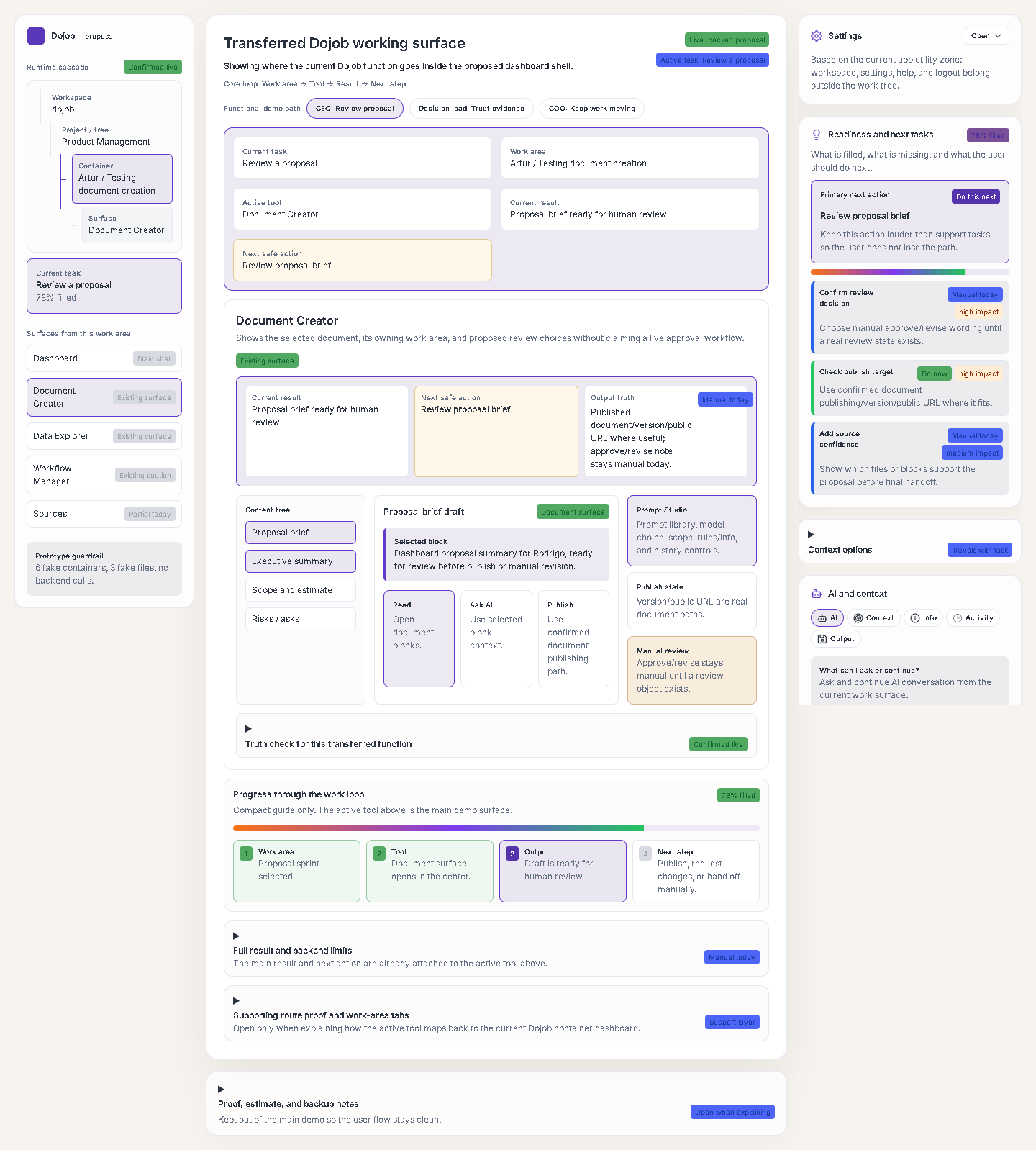
Turning a complex AI work surface into a clearer dashboard direction with visible work areas, tool logic, and next actions.
Role
Product direction, workflow mapping, dashboard structure
Evidence
Workflow maps and dashboard preview screens showing connected tool, work-area, and output paths.
Outcome without inflated metrics
Case direction became easier to inspect and align with operational stakeholders without promising implementation completion.
Boundary
No private comparison packets, private notes, final implementation evidence, or unsupported outcome claims are exposed.
Showing how A&T keeps complex project work organised, reviewed, and easier to resume without exposing private client material.
Role
Delivery process design, review rules, workflow documentation
Evidence
Documented delivery rules, review routines, and project checks that show how complex work is kept organised.
Outcome without inflated metrics
Clearer project handoff, safer review habits, and more repeatable delivery checks.
Boundary
Private client data, credentials, and unreleased materials are excluded.
Fictional-data demos
Synthetic demos show triage, human approval, and follow-up without pretending they are client outcomes.
Showing how an enquiry can move from request to triage, draft response, human approval, owner handoff, follow-up, and weekly improvement.
Role
Workflow mapping, intake triage, draft follow-up logic, human-review boundaries
Evidence
Fictional service-business request showing triage, owner assignment, draft reply, approval, and follow-up.
Outcome without inflated metrics
The workflow can be reviewed before connecting any private inbox, client data, or live automation.
Boundary
This demo uses fictional data. It does not claim a live client result, lead-volume increase, or production automation deployment.
Next step
If one of these examples is close to your problem, send a short brief with the right lane selected.
Evidence sections
Each item ties one claim to real evidence, a publication boundary, and the next move for making it stronger, without compressing the evidence into a tight grid.
Evidence
Research foundation, trust blocks, 30-second script logic, clinic-session visuals, public credentials, and equipment proof are already available to review on the case page.
Claim
Specialist offers can be translated into buyer-safe messaging when research, authority, proof, and support are structured before asset production.
Boundary
No clinical efficacy, commercial performance, or private client media is claimed without measured evidence and explicit permission.
Evidence note: Public summary using approved visuals; private results and testimonials excluded
Inspect trust caseEvidence
Delivery rules, project notes, generated-route checks, and review habits support the systems example.
Claim
Complex delivery work becomes safer when project boundaries, memory, verification, and automation lanes are made explicit.
Boundary
No private client data, credentials, or unreleased material is shown.
Evidence note: Internal systems example with private material excluded
Inspect systems case
Evidence
A&T-created available to review workflow maps, dashboard preview screens, and design-summary logic show the current product-direction thinking without exposing private comparison packets.
Claim
Product direction is easier to inspect when dashboard, work area, tools, outputs, and next actions are designed as one visible path instead of scattered surfaces.
Boundary
Current product-direction work only: no private before-and-after packets, private notes, final implementation evidence, or unsupported outcome claims are shown.
Evidence note: Named planning case using approved public work examples
See Dojob case
Evidence
The public service ladder now routes deeper technical, AI, and handoff issues into a bounded diagnostic before implementation.
Claim
A smaller diagnostic can reduce workflow risk when repeated tasks, tool handoffs, forms, CTAs, tracking, and review points turn into a clear priority queue.
Boundary
This is not sold as guaranteed savings, autonomous decisions, or a generic full-project promise; it is a scoped diagnostic and remediation layer.
Evidence note: Public service example with bounded deliverables
See audit routeEvidence
The A&T case and evidence map already document prototype work around lead discovery, market-signal monitoring, and human review checkpoints.
Claim
Automation value can be shown through workflow logic, signal routing, and review boundaries before any public performance claim exists.
Boundary
No investment advice, no trading results, no automated execution claim, no lead-volume promises, and no collaborator naming without explicit consent.
Evidence note: Demo lane with final public examples still pending
See readiness mapProof pipeline
The site makes progress visible without pretending everything is equally public, equally measured, or equally finished.
Internal systems example with bounded public copy and no private client material.
Next evidence move: Add redacted interface screenshots or code-native artifact frames.
Named case direction available for review, with stronger clinic, credential, and device visuals now added to the case.
Next evidence move: Keep results, testimonial media, and non-public client material out unless explicit permission exists.
Named current product-direction proof based on dashboard previews, workflow maps, and artifacts that are safe to show now.
Next evidence move: Keep this framed as direction and artifact proof unless final implementation evidence is approved later.
Software experiment proof for workflow design, signal routing, monitoring logic, and review boundaries.
Next evidence move: Create available to review workflow maps without investment advice, trading results, automated execution, revenue, or lead-volume claims.
Fictional clinic data shows the workflow shape: request, triage, draft, approval, owner, follow-up, and weekly improvement.
Next evidence move: Use this as proof of delivery logic until a client-approved case study or measured outcome exists.
Synthetic work example
This available to review demo uses fictional clinic data to show the shape of the Customer Intake + Follow-Up System: requests arrive, get classified, receive human-approved draft replies, gain an owner, and keep follow-up visible.
What this proves
Workflow design, triage logic, draft control, handoff visibility, and follow-up rhythm.
What it does not claim
No autonomous sending, no clinical advice, no lead-volume promise, and no measured client outcome yet.
Customer intake dashboard demo
Incoming requests
Website form
Appointment question
Price and package request
WhatsApp note
Urgent callback
Human-approved draft layer
Suggested response is prepared from approved source material, then held for human review before sending.
The system marks what it does not know, so the team can answer safely instead of improvising.
Weekly improvement note
System map
CRM handoff
Guardrails
AI adoption proof
A&T shows AI-assisted workflow discipline in practice. The lead bot, signal-monitoring prototype, and service-token method support the event as workflow proof: map the work, define review points, then automate only where it is safe.
Explore AI event laneWork artifacts
Existing proof remains useful, but the page should lead with client-ready portfolio cases and a named current-project lane instead of generic proof cards.
Current project 01
A dashboard-centered work-path map created by A&T shows how work areas, tools, output, and next actions should connect inside the product.
Reviewable visual proof: workflow contact sheet and dashboard-centered design summary for the current project direction.
Current project 02
A&T-created preview screens explore how dashboard home, work area, tool tabs, and output panels can feel like one connected product path.
Reviewable preview captures show proposed restructuring without exposing private before-and-after packets or final implementation claims.
Inspectable deliverables
Preview screens for a dashboard-centered product direction that keeps work area, AI, documents, data, and outputs connected without claiming ownership of final implementation.
A fast-scan map of work item, tool path, output, and next action for a current product-direction client.
Reviewable clinic, credential, and equipment visuals that make a specialist offer easier to trust without overclaiming results.
A short view of what is broken, what can stay manual, and what should be fixed first.
A simple path from visitor intent to CTA, CRM handoff, and follow-up.
Stages, lead source fields, owner rules, and follow-up checkpoints.
Events and reporting views tied to decisions instead of vanity dashboards.
Early software experiments around a lead bot and a market-signal monitor support workflow design, signal routing, and review boundaries without turning the proof into public performance claims.
Proof artifact model
This keeps proof concrete without inventing metrics, exposing private work, or making client results sound measured before they are.
The decision or capability the artifact supports.
The available to review asset, workflow map, screenshot, or bounded description.
What the artifact does not claim, especially metrics or outcomes not measured yet.
Client work, A&T system example, demo, in-progress work, or private material excluded.
Evidence standard
Use this format for every real case: starting problem, commercial constraint, what changed, what was measured, and what decision became easier.
A visual before/after is useful, but the stronger proof is showing how the work improved clarity, lead quality, conversion, or operating rhythm.